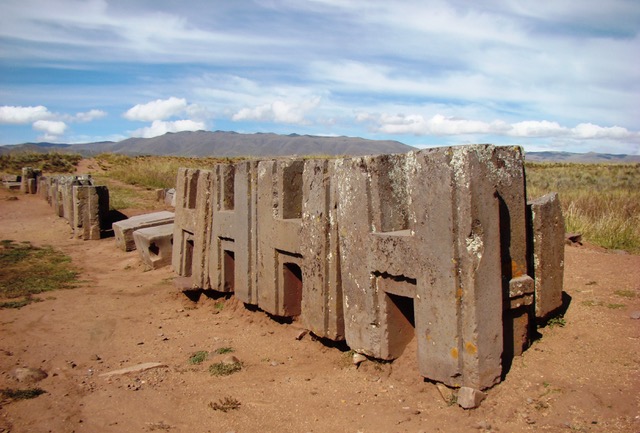

In this presentation, we examine the results of 24 independent remote viewing sessions targeting Puma Punku, the remarkable megalithic complex associated with the Tiwanaku civilization in present-day Bolivia.
Remote viewing is a structured protocol in which participants attempt to describe a hidden target, such as a person, place, object, or event, usually without being given information about the identity of the target.
For this project, our remote viewers were given no information whatsoever about the target before or during their sessions. They did not know the target was Puma Punku, nor were they given any information about the site, its H-Blocks, or the purpose of the experiment. The identity of the target was revealed only after all remote viewing sessions had been completed.
The presentation begins with an overview of Puma Punku and the project’s tasking objectives, followed by an analysis of the recurring themes that emerged across the remote viewing data. Each remote viewer then presents their individual sessions, allowing you to examine both the common patterns and the unique observations contributed by each participant.
Among the topics explored are possible methods used to construct Puma Punku’s remarkable H-Blocks, the shaping and transportation of the site’s massive stones, the purpose of the complex, and other recurring themes identified by the viewers.
The purpose of this presentation is not to prove or disprove any particular theory about Puma Punku. Instead, we present the remote viewing data alongside current archaeological understanding and invite you to examine the evidence and draw your own conclusions.